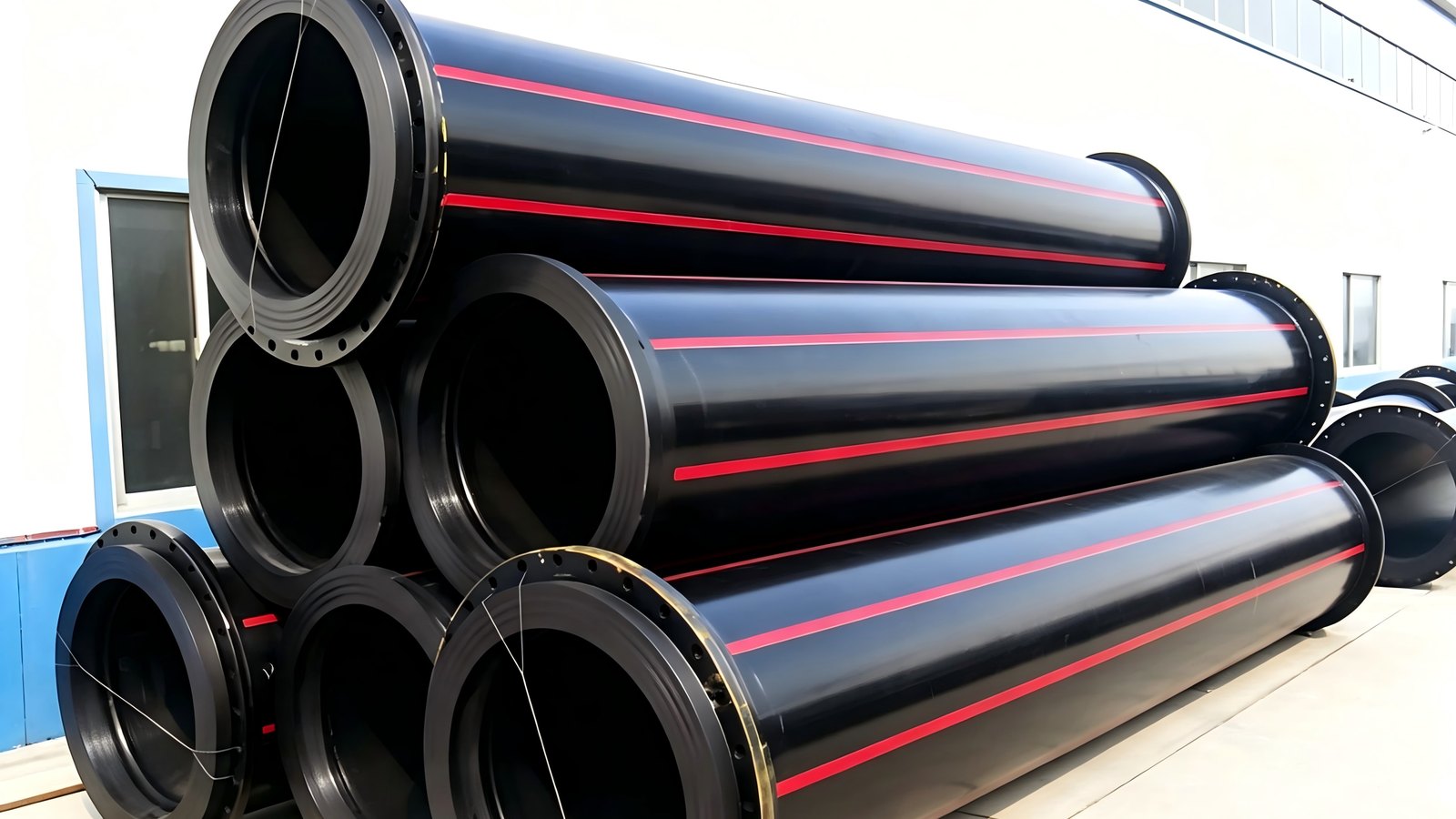
HDPE pipe is now the default backbone of slurry, dredging and marine transfer lines, and choosing the factory that extrudes it is one of the highest-leverage decisions on a project budget. A dredging contractor can accept a slightly higher unit price and still finish under budget, provided the wall thickness, the certification file and the delivery date are right. Get those three wrong and the cheapest quote becomes the most expensive pipeline you ever install.
Most buyers arrive with a spreadsheet, a supplier list and a hard deadline. What they lack is a fair comparison. Supplier websites are written to sell, not to compare, and price lists hide the resin grade, wall thickness class and export packaging that determine landed cost. Nobody in China publishes a table showing themselves losing to a competitor.
We reviewed ten Chinese factories that extrude HDPE pipe for slurry, dredging, mining and municipal transfer service, checked their published capacity, certification and export records, and set them against one another using the same six criteria. Our own supply chain, Shandong Heartwork Supply Chain Management Co., Ltd., is included on the same basis.
1. Why the Factory Behind Your HDPE Pipe Matters in 2026
1.1 What has changed in the last eighteen months
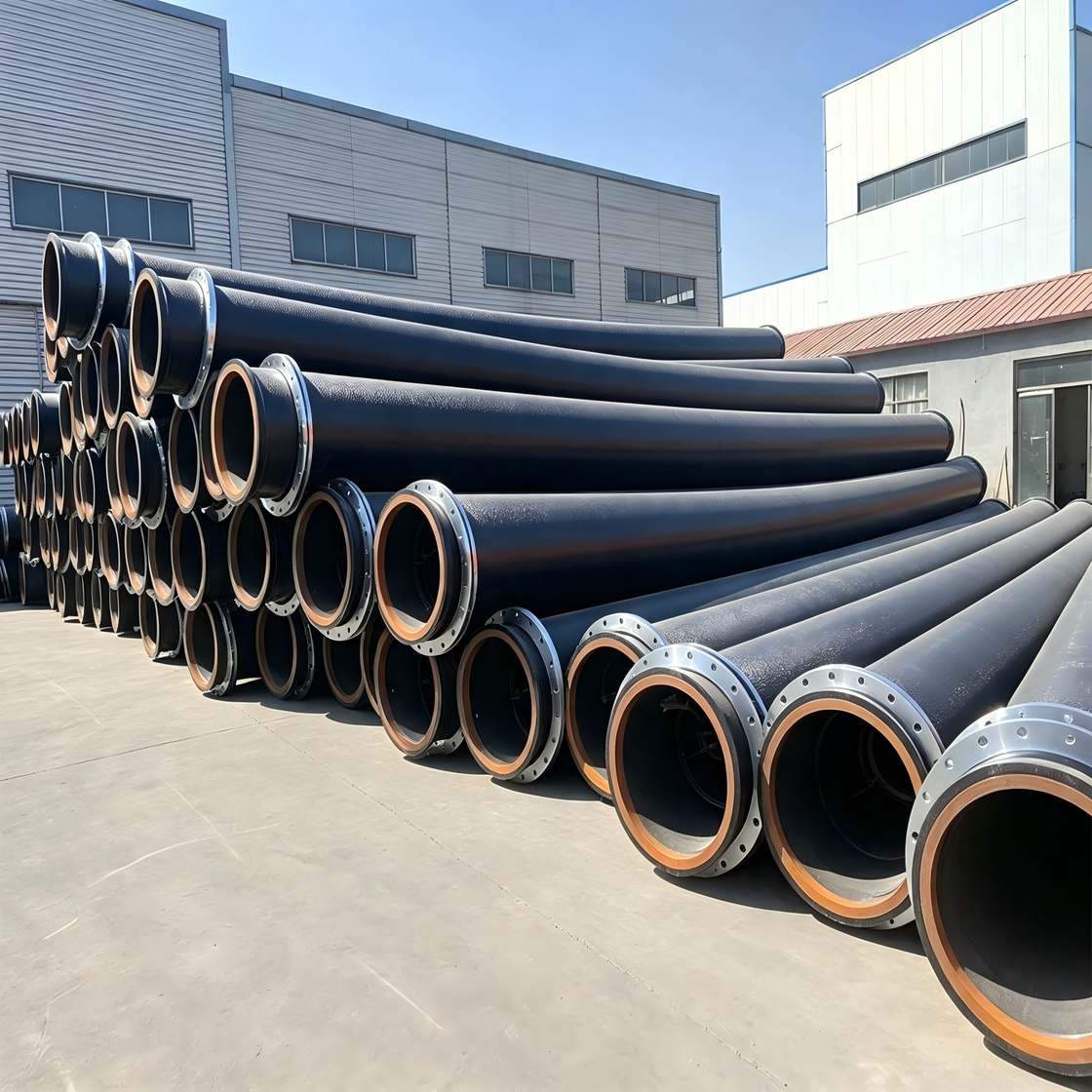
Three shifts have reshaped how engineers buy HDPE pipe. First, resin transparency became mandatory: buyers now ask for the melt flow rate and density certificate of the batch behind their pipe, because a mixed-recipe PE100 line looks identical on the yard and behaves differently at two metres per second.
Second, the delivered cost of an oversize pipe is dominated by everything except the pipe. A DN1200 line shipped as six-metre lengths needs a lowbed, an oversize permit and a crane on site, while longer sections change the laying rate, the fusion joint count and the crew size on the beach.
Third, the baseline for documentation moved up. A hydrostatic test log, an adhesion test for reinforced lines, a batch number tracing back to the resin lot, and a willingness to host a third-party witness are now the minimum. Frameworks such as the hydraulic and slurry-handling standards published through pumps.org show what a good test file looks like.
1.2 The three questions every buyer asks first
Three questions decide the shortlist in practice. Can this factory extrude the diameter I need, at the pressure class I need, with documentation I can hand to a client’s engineer? Can they deliver on a date my programme can absorb? And will the price hold if a trial becomes a repeat order?
Everything else here answers those three questions for ten factories. Where a factory’s public profile is thin, we say so plainly — a thin paper trail is not a disqualification, but it changes how much weight you put on the price. Two items quietly decide landed cost: section length and shipping windows, and whether the factory can put a whole pipe line on one vessel.
2. How We Scored the Ten Factories
2.1 The six criteria and their weights
We scored every factory on the same six criteria, weighted for dredging pipe and slurry work.
| Criterion | Weight | What we actually checked |
|---|---|---|
| Production scale | 20% | Line count, diameter range, tonnage, base count |
| Certification and documentation | 20% | ISO systems, pressure-pipe licences, drinking-water approvals, witness testing |
| Export readiness | 20% | Export markets, container loading, batch traceability, English documents |
| Breadth for slurry service | 15% | Whether solid wall, steel belt and structural lines sit under one roof |
| Price positioning | 15% | Listing price levels, virgin vs recycled resin, packaging |
| Delivery and after-sales | 10% | Lead time, own install team, warranty practice |
Scores follow published evidence: a factory publishing a licence number and test scope scores higher than one writing “high quality”.
2.2 What we deliberately did not score
We did not score factory appearance, brand recall or the number of languages on a website — none of those tell you whether a DN1400 dredging pipe arrives on time with a readable test file.
We also did not visit the factories. Every rating comes from manufacturers’ own published profiles, licence records, and public B2B price listings, cross-checked for consistency. Where two suppliers publish suspiciously identical figures, we flag it: a profile describing 390 employees, 60 production lines and 100,000 tonnes of annual capacity appears under more than one company name here. Buyers who spot that pattern save a factory visit, and can check a supplier’s standing with the IADC before paying.
3. The Head-to-Head Comparison Table
The table ranks the ten factories on the six criteria and adds our own supply chain on the same basis.
| # | Factory | Founded / Base | Scale snapshot | Max DN | Price band | Value score |
|---|---|---|---|---|---|---|
| 1 | Shandong Tengyuan Building Materials (Linyi, Shandong) | Capital RMB 108.88M | 60+ lines, 5 bases, 200,000 m², 390 staff | DN1800 | Mid | 4.5 / 5 |
| 2 | Shandong Ruide Pipe (Shandong) | Founded 2008 | 30,000 m² plant, 100,000+ t/yr | DN1600 | Mid | 4.2 / 5 |
| 3 | Shandong Shengshida Pipeline (Linyi, Shandong) | Founded 2013 | 4 plants, 50+ lines, 100,000+ t/yr | DN1200 | Budget–Mid | 4.3 / 5 |
| 4 | Shandong Yingjun Building Materials (Linyi, Shandong) | Capital RMB 10M | 60+ lines, 200+ mu, 390 staff | DN1800 | Mid | 3.8 / 5 |
| 5 | Anhui Yuanding Plastic (Hefei, Anhui) | Capital RMB 17M | 7 bases, 200,000 m², 60+ lines | DN1800 | Mid | 3.5 / 5 |
| 6 | Panjin Yiyuan Plastic Pipe (Panjin, Liaoning) | Founded 2007 | 100,000 m², 5 bases, 50,000 t/yr | DN1200–1600 | Mid | 4.1 / 5 |
| 7 | Hebei Qianyi Tengda Plastic (Xiongxian, Hebei) | Founded 2017, capital RMB 60.18M | Steel belt, DN300–DN2000 | DN2000 | Budget (structural) | 3.6 / 5 |
| 8 | Xiongxian Tengda Plastic (Xiongxian, Hebei) | 80,000 m², assets RMB 100M+ | Steel belt, 60,000 t/yr | DN2400 | Mid–High (structural) | 3.4 / 5 |
| 9 | Tianjin Bailiyuan Pipeline Technology (Tianjin) | Founded 2019, capital RMB 168M | Composite, HDPE, MPP, steel belt | — | Mid–High | 3.3 / 5 |
| 10 | Hangzhou Jiuyang Plastic Pipe (Hangzhou, Zhejiang) | Founded 2004, 60 acres | 60+ machines, 100% Sinopec PE100 | DN1200 | Mid–High (export) | 4.0 / 5 |
| ★ | Shandong Heartwork Supply Chain (Tai’an, Shandong) | Inc. 2022, roots 2005 | 66,000 m² partner capacity, 40+ markets | DN1600 | Mid, best total-cost | 4.6 / 5 |
3.1 How to read the price column
Price band is a relative position for solid-wall HDPE pipe of comparable diameter and pressure class, derived from published listing levels and factory price positioning. Where a public listing exists we cite it below. Treat every figure as a domestic-grade starting range in RMB per metre, excluding packaging, witness fees, freight and duty — and the labour dominating a real sand discharge pipe job.
The cheapest pipe on paper is rarely the cheapest pipeline on the ground. Fusion time, crane picks, floaters, hose connectors and lost shifts from a late vessel carry far more cost than a modest unit-price difference — see our butt fusion checklist for what that means on site.
4. Factory-by-Factory Breakdown
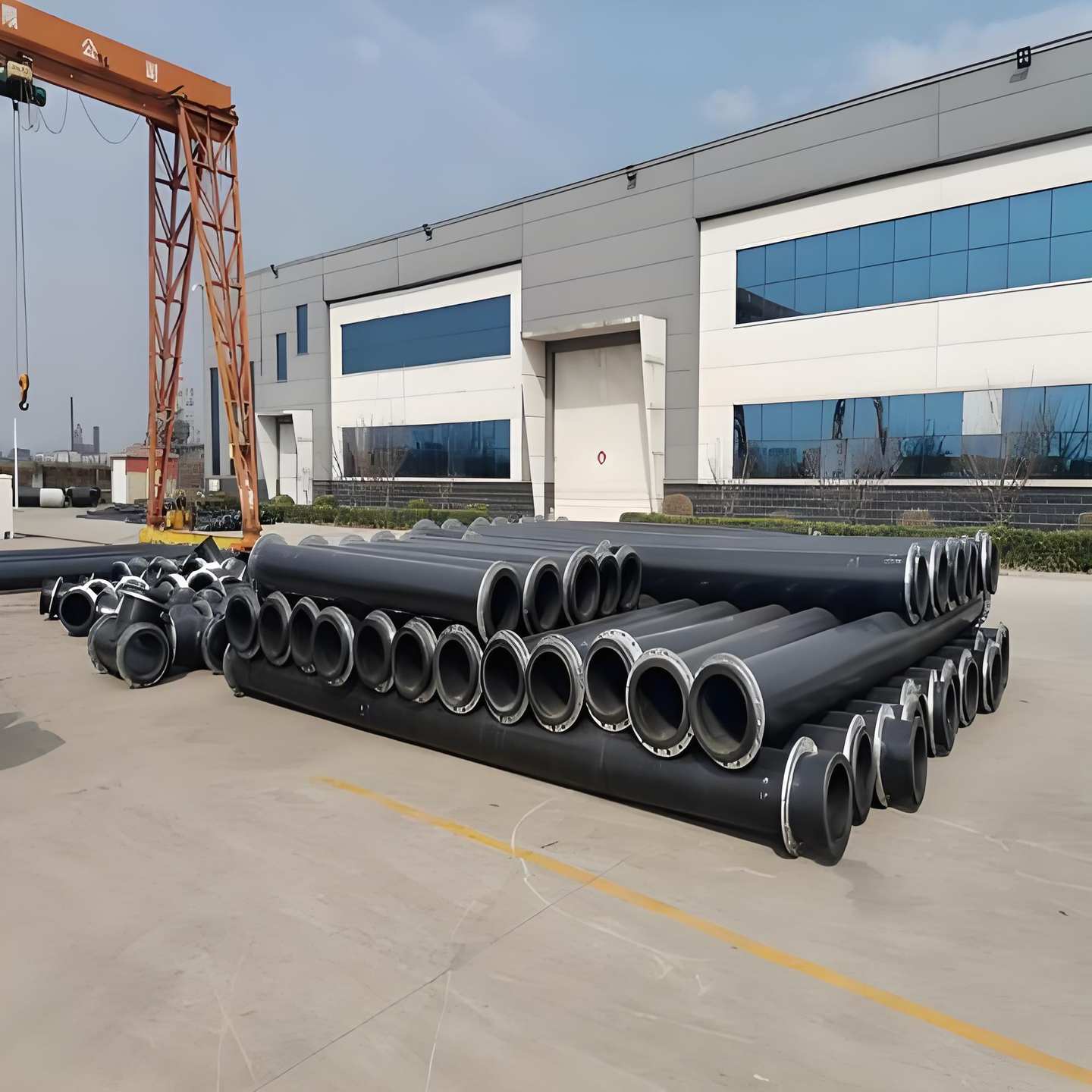
4.1 Shandong Tengyuan Building Materials — the largest extrusion footprint
Tengyuan publishes one of the deepest manufacturing profiles in the Chinese HDPE pipe industry: registered capital of RMB 108.88M, ISO 9001, 14001 and OHSAS 18001, plus BV, SGS and TÜV certification. Dredging engineering is a published system.
Strengths. Capacity of this order means a DN1400 dredging pipe order does not disturb other customers’ schedules, and pipe and fittings sit in one group.
Weaknesses. Scale this large brings fixed costs and a corporate sales layer, which shows up in quotation responsiveness. The published profile is nearly identical to two other regional suppliers, so confirm which entity and base runs it.
Typical project fit. Very large multi-phase programmes where volume absorbs overhead and the client wants third-party witness.
4.2 Shandong Ruide Pipe — the DN1600 specialist
Ruide reports turnover of RMB 210M, national high-tech enterprise status and provincial specialised-and-new recognition, with CE certification and ISO 9001, 14001 and OHSAS 18001. Unusually, it runs its own construction team with second-class qualifications.
Strengths. One of the few Chinese plants publicly claiming a 1600 mm solid-wall line, precisely the diameter band that decides whether a dredging pipe run can be built in HDPE at all. The in-house team means install advice and supply come from one firm.
Weaknesses. A 30,000 m² footprint is small next to the multi-base producers, so large orders need lead-time confirmation, not assumption. Gas and water supply, not slurry, appear to be the core market, so abrasion experience is thinner.
Typical project fit. River crossing and outfall runs where DN1200 to DN1600 is the working diameter and the client wants a certifiable pipe.
4.3 Shandong Shengshida Pipeline — the documentation leader in its class
Shengshida extrudes with on-line wall-thickness and diameter monitoring, and holds a special-equipment manufacturing licence for pressure pipe category B valid to 2029, a drinking-water approval, and ISO 9001, 14001 and 45001. Its 56,200-tonne expansion was a district key project in 2024.
Strengths. The most complete licence package per square metre here: a pressure-pipe licence plus a drinking-water approval plus three-system certification is what a municipal client’s engineer asks for, documented rather than claimed. Pipe and fittings come from one plant with matched melt flow index, removing the leading cause of leaks.
Weaknesses. The DN1200 ceiling excludes the largest outfall sizes. Public case references lean towards municipal water and non-excavation crossing rather than abrasive slurry, so dredging pipe duty is less proven than the paperwork.
Typical project fit. Municipal water and drainage packages, and sand discharge pipe runs up to DN1200, where paperwork matters as much as metal.
4.4 Shandong Yingjun Building Materials — capacity without a clear differentiator
Yingjun runs 60-plus Battenfeld-class lines and exports to 30-plus countries including Chile, Argentina, Russia, the UAE and Sudan.
Strengths. Genuine export experience in Latin America, Central Asia and the Middle East, which matters for documentation language, port handling and payment structures. Published systems include dredging, mining and irrigation.
Weaknesses. The published figures overlap almost exactly with two other suppliers, weakening how far they can be relied on without a visit. Registered capital of RMB 10M against a claimed 100,000-tonne output is a thin buffer, so payment terms deserve scrutiny.
Typical project fit. Distributors buying container volumes of sand discharge pipe for Central Asian or South American dredging programmes who want an experienced exporter, not a low price.
4.5 Anhui Yuanding Plastic — the widest multi-base network
Yuanding operates seven production bases in Baoding, Lanzhou, Mianyang, Zhangzhou, Shenyang, Wuhan and Linyi/Zibo, with 60-plus lines and 90-plus injection moulding machines. Its six published systems include dredging engineering, mining and irrigation.
Strengths. The seven-base network is the most geographically diversified here and shortens delivery to inland and north-western projects. The system list covers dredging, mining, agriculture and power, so a mixed tender comes from one source.
Weaknesses. Distance from Shandong export ports pushes freight cost up on containerised orders. The figures duplicate Linyi profiles almost line for line, so press for the base that will produce your order.
Typical project fit. Multi-site national programmes and mining or irrigation projects where a supplier close to the work site saves more in haulage than it costs in unit price.
4.6 Panjin Yiyuan Plastic Pipe — the northern multi-base producer
Yiyuan runs German Battenfeld extruders with Italian centralised feed, sources Total and Borealis resin, and holds a special-equipment manufacturing licence, a drinking-water licence and AAAAA credit rating. Exports go to Russia and Kazakhstan.
Strengths. Five stocked bases mean large orders ship from the nearest one, cutting inland haulage on bulky, low-value-per-kilometre cargo — exactly the profile of an HDPE pipe. Local subsidiaries with warehousing and their own construction teams give fast response in the north-west. The resin is named.
Weaknesses. The brand has little visibility outside China and the CIS, so overseas buyers handle logistics themselves. Its published strength is municipal and irrigation pipe, so dredging know-how is not core.
Typical project fit. Northern China, Xinjiang and Central Asian projects, or international buyers wanting a factory with its own construction team and domestic logistics.
4.7 Hebei Qianyi Tengda Plastic — structural specialist with real credentials
Qianyi Tengda was registered in 2017 in Xiongxian, Baoding, and operates HDPE double-wall corrugated and steel-belt reinforced spiral corrugated lines. Public listings show DN500 steel belt pipe at RMB 11 to 13 per metre.
Strengths. A young company with substantial registered capital and a clear specialisation, which usually means responsive quotations and a willingness to run trial orders. Steel belt pipe at this price is hard to beat for gravity work.
Weaknesses. Steel belt reinforced and corrugated pipe is a different product from the solid-wall pressure pipe used for pumped slurry. The inner flow surface of corrugated construction is not designed for abrasive slurry, so buying it as a sand discharge pipe is a specification error, not a saving.
Typical project fit. Gravity drainage, storm water and low-pressure outfall lines where cost per metre governs the decision.
4.8 Xiongxian Tengda Plastic — the widest structural diameter range
Tengda reports more than RMB 100M of fixed assets and steel belt reinforced production from DN300 to DN2400 with ring stiffness above 8 kN/m². Public listings price the product at around RMB 115 per metre, with hot-melt, mechanical and shrink-band joining.
Strengths. The DN2400 ceiling is the largest here, with real fixed-asset depth behind it. The product carries a stated service life comparable to solid-wall PE because the layers are fully bonded.
Weaknesses. At RMB 115 per metre, cost per delivered metre of working diameter is high, and the same structural-versus-pressure caveat applies. Foreign buyers face a long inland haul from Hebei to a port plus a sea voyage, eroding the advantage.
Typical project fit. Large-diameter gravity drainage, coastal outfalls and reclaimed-land drainage where very large diameter is the constraint.
4.9 Tianjin Bailiyuan Pipeline Technology — the newly capitalised composite supplier
Bailiyuan operates from the Tianjin Ziya Circular Economy Industrial Park. Its range spans steel-plastic composite pipe, coated steel, HDPE water supply pipe, MPP cable protection, irrigation pipe, steel belt and corrugated pipe.
Strengths. A large registered capital base relative to its age, and a range that lets a buyer consolidate civil, drainage and cable-protection procurement. Tianjin gives it a competitive port position.
Weaknesses. A young company with a wide catalogue tends to be deeper in some lines than others, and dredging slurry duty is not its published centre of gravity. Confirm which lines run at your volume.
Typical project fit. Integrated civil and drainage packages where one supplier covers HDPE pipe, composite and ancillary products.
4.10 Hangzhou Jiuyang Plastic Pipe — the agile export specialist
Jiuyang was established in 2004 in Hangzhou with 60-plus production machines and a stated policy of 100% new Sinopec PE100 resin, no recycled input. It publishes 5 to 15 day delivery, ISO 9001 and 45001, OEM and ODM service, and custom welded fittings up to 1.2 m — resin brand named on every listing.
Strengths. The cleanest export posture in the comparison: named virgin resin, short published lead times, OEM labelling, low minimum volumes. The 5-to-15-day statement is the most useful number here for a buyer in a hurry.
Weaknesses. A published capacity figure of 1,000 tonnes per year on some listings points to a plant scaled for mid-sized orders, not bulk tonnage. Zhejiang competes for export slots with higher-volume northern plants, and dredging engineering support is not its strength.
Typical project fit. Pilot and trial orders, private-label supply for distributors, and urgent replacement shipments where speed beats unit price.
5. Where Heartwork Fits: One Source for HDPE Pipe, Rubber Hose and Floaters
We built this guide from a supplier’s seat, so here is our own position stated as plainly as everyone else’s. Heartwork is not the biggest extruder in China and we do not claim to be. What we do is coordinate three specialist manufacturers in Shandong Province with a combined 66,000 m² of partner capacity, and we have specified dredging pipe systems since 2005, before we incorporated the company in 2022.
5.1 The advantage of a multi-category supplier
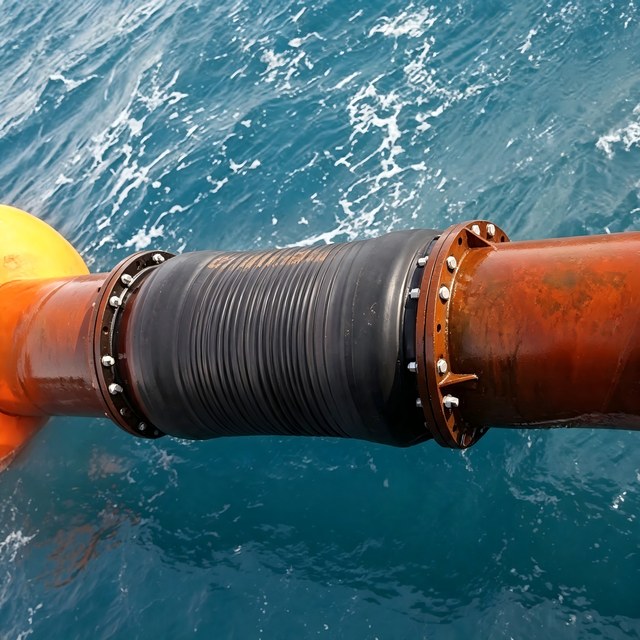
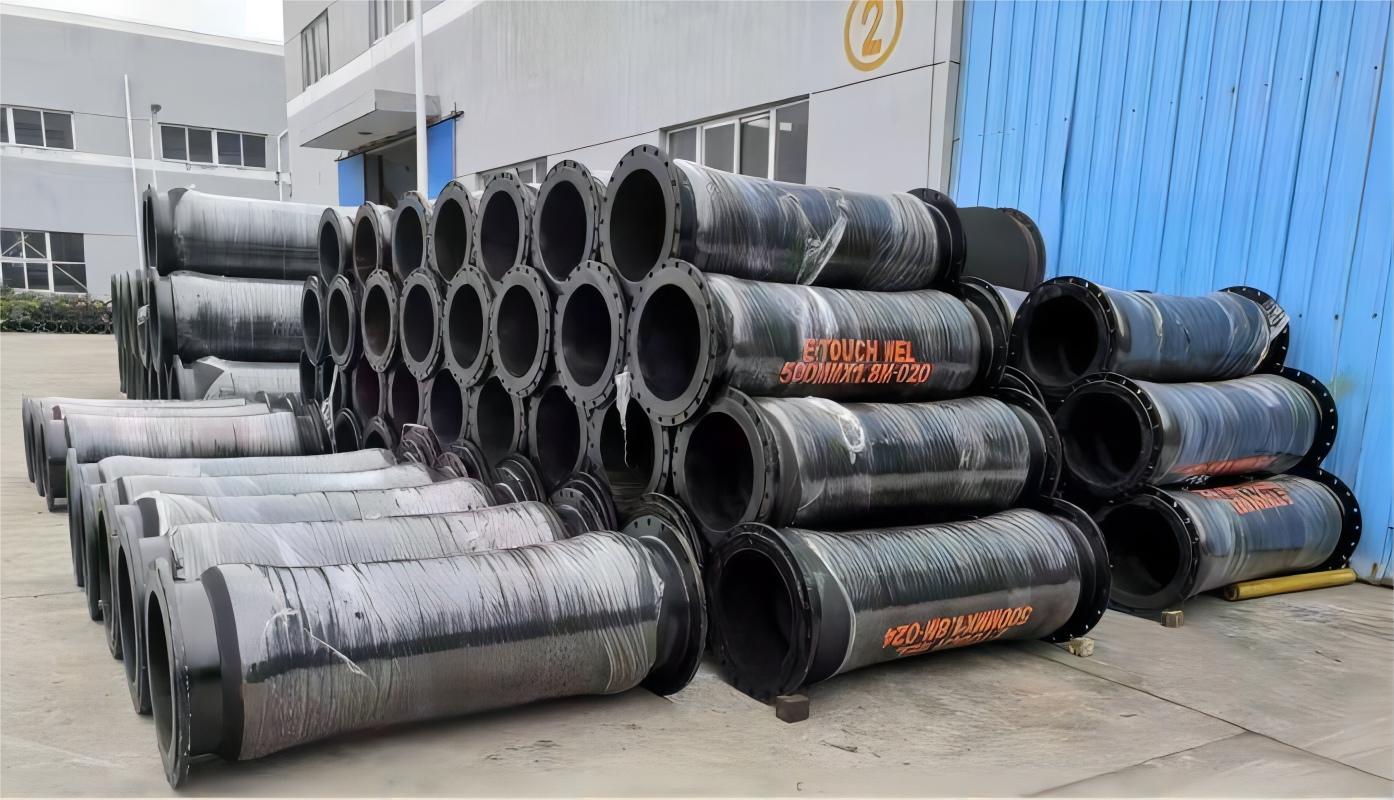
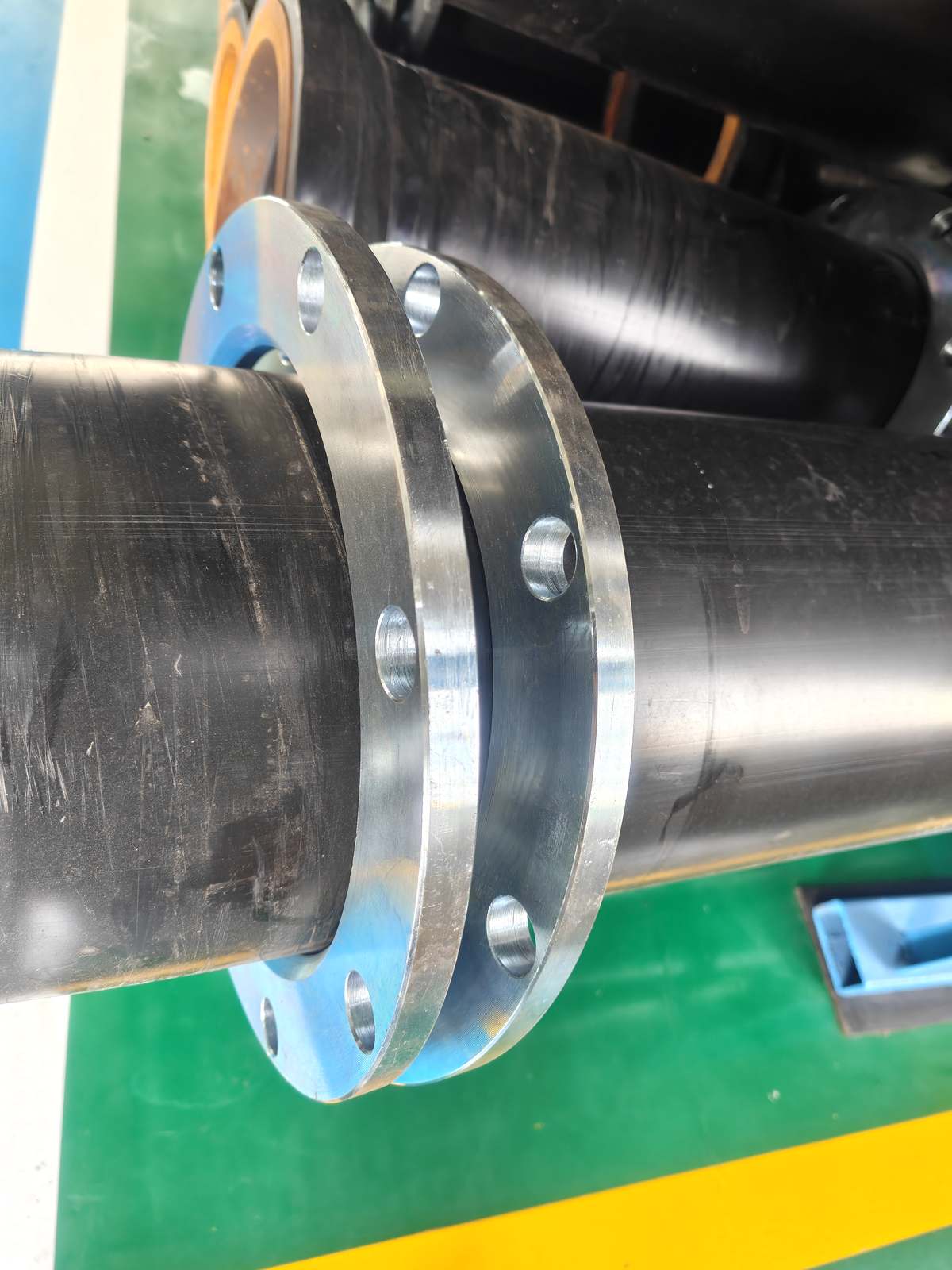
A contractor buying from separate vendors manages three supplier relationships, three lead-time schedules, three test files and three claims processes. If the pipe arrives and the floaters do not, the dredging pipe is useless sitting unsupported in the water. Heartwork supplies HDPE pipe from DN110 to DN1600 in PE100 virgin resin, PN6 through PN16, SDR11 to SDR26 wall series, three end configurations including heat-fusion flanged and movable flanged, sand discharge hose and sand suction hose, and rotationally moulded floaters in DN200 to DN1200 with foam or air cores — one package, one delivery.
The measurable consequence is not a lower pipe price. It is fewer interfaces. Every interface between two suppliers is where a programme slips: a mismatched flange, a delayed floater, a heat-fusion weld rejected by a client’s inspector because the test file came from another factory.
5.2 What we coordinate for you
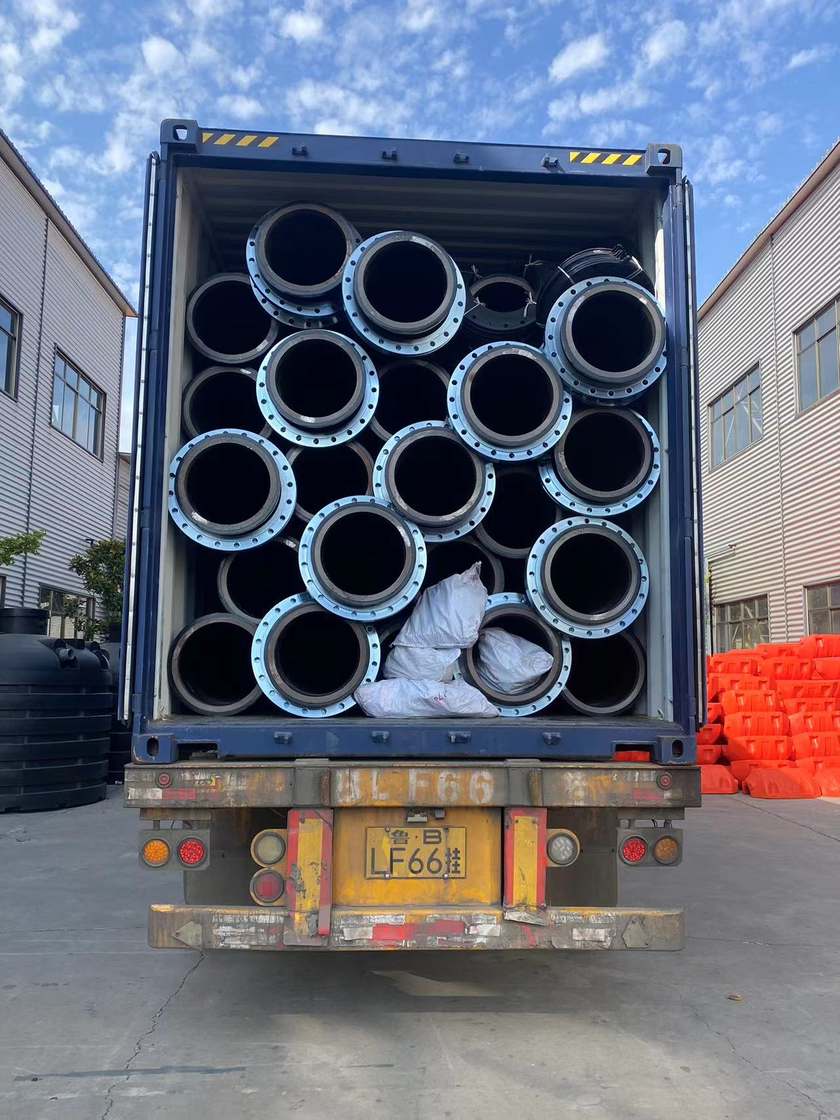
Behind that package sit CNC hose calendering lines for multi-ply rubber layup to DN1200, steel-cord spiral machines for suction vacuum and slurry pressure duty, HDPE pipe extrusion trains from DN200 to DN1600 with inline wall gauging, and rotational float moulding. Every batch carries a hydrostatic and adhesion record, burst and hold-pressure rigs log results against the batch number, and witness testing by SGS, BV or TÜV can be scheduled with safety induction on arrival. 40-foot loading bays take the oversize sections that make a dredging pipe line economical. Lead time: 25 to 45 days.
5.3 When Heartwork is the wrong choice
If you need twenty containers of DN200 irrigation pipe by next Tuesday, a plant with 100,000 tonnes of dedicated extrusion capacity will beat us on price and speed, and you should buy from them. If you want a single extruded-wall sand discharge pipe with nothing else, a specialist extruder is the right call. Our advantage appears only when the job needs a working pipeline: pipe, hose, floaters and connectors specified together, one shipment, one test file.
6. Matching a Factory to Your Project Type
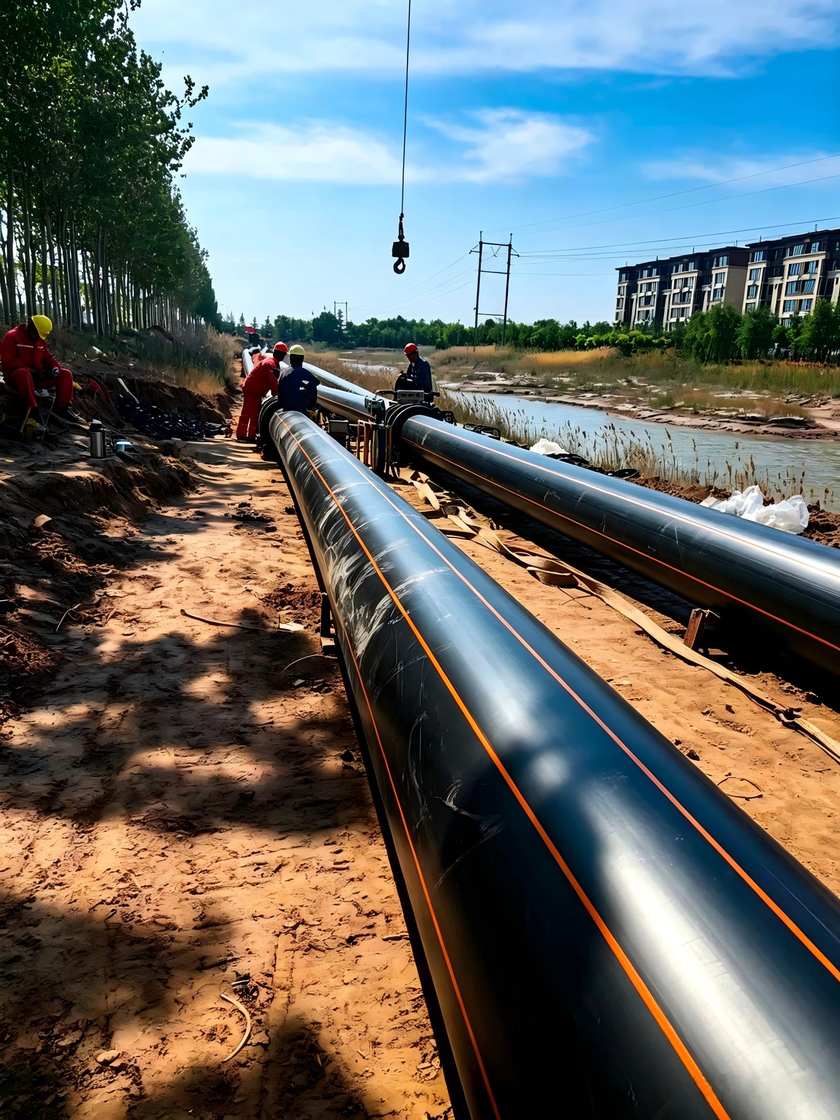
6.1 Dredging and land reclamation contractors
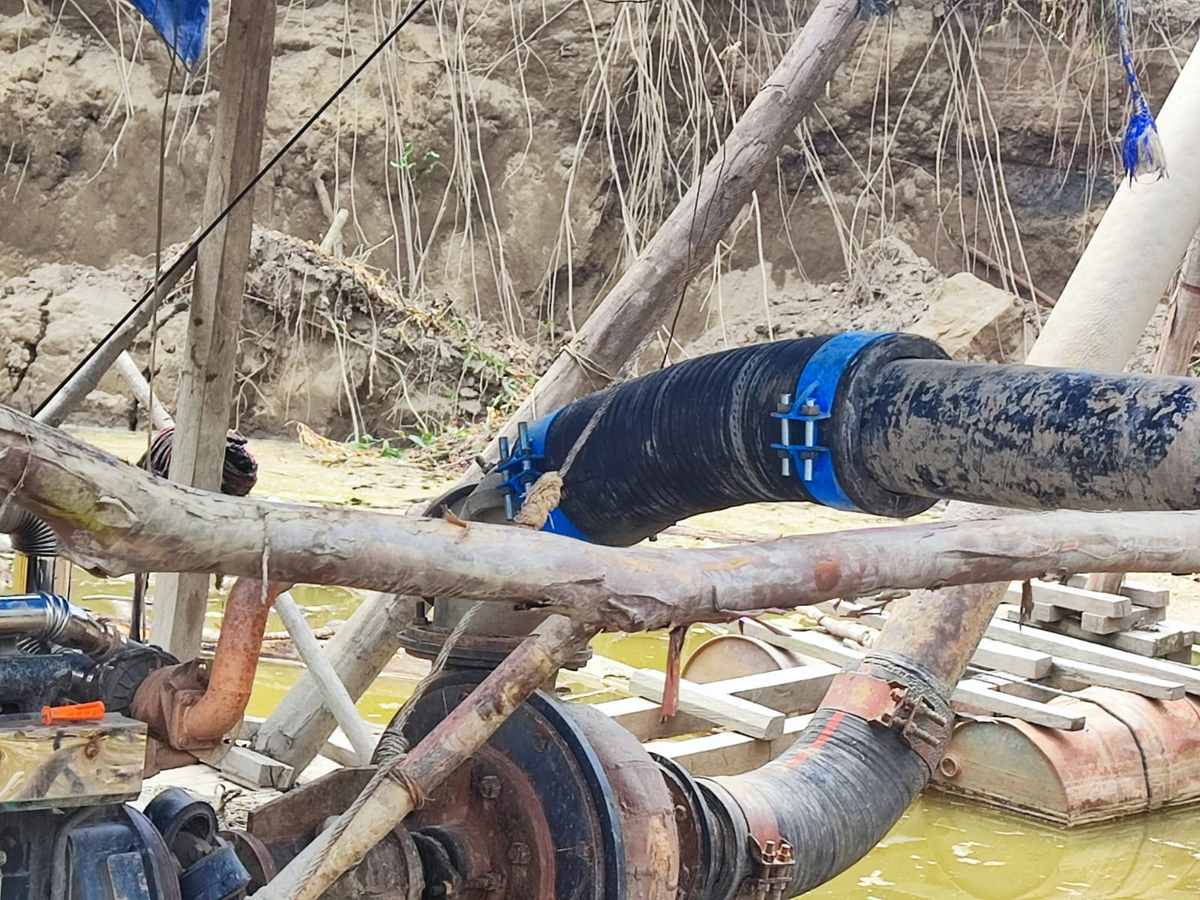
Your binding constraints are abrasion resistance, pipe stiffness across a long unsupported span, connection speed on the beach, and getting a complete line out of the terminal. Prioritise suppliers who deliver floaters and hose in the same shipment as the dredging pipe, and who discuss wall thickness in SDR rather than millimetres. Where the pump discharge sits in the highest-wear zone, ask whether that sand discharge pipe section should be rubber-lined.
6.2 Mining and tailings
Residence time and solids concentration drive everything. High solids and long runs favour a heavier SDR, and tailings lines want a much lower working velocity than a general slurry line. Confirm the extruder’s policy on recycled content, because blended HDPE pipe resin behaves differently under abrasion, and ask to see the traceability chain.
6.3 Municipal water, drainage and power corridors
Here the specification is compliance. The winning supplier is the one whose licence, drinking-water approval and third-party test scope already cover your tender document, because an approval that does not exist cannot be substituted later. For non-excavation crossing, ask for pipe and fittings from one plant with matched melt flow index.
7. A Purchase Order Checklist Before You Commit
7.1 Documents to demand before paying a deposit
Ask for the pressure-pipe production licence where the standard requires one, the drinking-water hygiene approval if the line touches potable water, the ISO certificates with expiry dates, and a recent third-party test report on the exact diameter and pressure class of the HDPE pipe you are buying. Then ask for a resin declaration naming the grade and supplier, with a melt flow rate figure. Cross-check the licence number against the issuing authority’s register rather than taking the PDF at face value. If a factory cannot name its resin supplier, treat the price as a low-specification price. For lines carrying solids, ask about abrasion and slurry service and the wall series tested.
7.2 Site, logistics and claim questions
Confirm the maximum section length of the dredging pipe against your laying plan and transport permits, because it changes crane picks and fusion joint count. Establish the delivery window in writing with liquidated terms attached, and confirm the replacement policy for a batch that fails on arrival. Ask who attends the site after the first failure and how quickly. Get the floaters and connectors for the sand discharge pipe in the same order, because the pipeline is only complete when it floats.
8. Frequently Asked Questions
8.1 Is HDPE pipe suitable for abrasive slurry service?
It is, with the right wall series. HDPE pipe resists abrasion because the polymer surface has no metal to erode, but wear rate rises sharply with solids concentration and velocity, so the wall series must suit the duty, not the pressure. Many buyers settle on a matched pair for a dredging pipe run: an HDPE sand discharge pipe for the long fixed runs and a rubber-lined hose for the pump discharge zone, where wear and pressure peak together. We compared the two in our guide on rubber hose or HDPE.
8.2 Which SDR and pressure class should a dredging pipe be specified in?
For most sand discharge pipe duties, SDR 17 and SDR 21 are the practical working range, with SDR 11 reserved for short, high-pressure sections near the pump where transients are severe. A higher PN class costs more resin per metre than a thicker wall chosen for abrasion, so decide first whether your design driver is pressure or wear. One caution: do not order to the pump nameplate pressure alone — over-specifying leaves margin the wall pays for in every metre.
8.3 How do I verify a Chinese pipe factory before I commit?
Verify four things independently rather than three politely. First, the pressure-pipe production licence number against the issuing authority’s register. Second, the resin grade and its melt flow rate, in writing. Third, a batch number on the pipe itself tracing back to a test record. Fourth, a factory visit or live video walk-through of the extrusion line, with your own questions rather than the sales script. A factory resisting the first three is telling you something.
8.4 Is it cheaper to buy pipe, hose and floaters from one supplier or from three?
On unit price, one supplier is usually more expensive, because a specialist extruder prices HDPE pipe and a hose plant prices hose and neither discounts a bundle they do not offer. On installed cost, one supplier is usually cheaper, because the interfaces between vendors are where programmes slip: a float delay, a flange mismatch, a rejected weld on a test file from another factory. A rejected joint on a beach costs several times the gap between quotes.
8.5 What is a realistic lead time, and how should I plan around it?
For a standard diameter and pressure class from an established Chinese plant, published lead times run from two weeks on small export orders to 25 to 45 days for a configured dredging pipe package, with large-diameter or non-standard SDR adding more. What hurts is not production time but the shipping window and port congestion on top, so build the programme with a buffer on the vessel leg and ask for section length in writing before committing.
8.6 Can HDPE pipe be used for floating discharge lines, and do I still need floaters?
It can be floated, but the pipe itself is not a floater. HDPE pipe weighs roughly one-eighth of the same diameter steel pipe, yet a long filled section still displaces more water than it weighs and will sit low. Partially submerged running is where dedicated floaters become necessary: they hold the line at the design waterline and keep the discharge point in position. Float spacing and submerged percentages are in our floater spacing guide.
9. Conclusion
The ten factories here all produce sound pipe, and several are excellent at it. The differences that matter are narrower and more practical than the marketing suggests: whether the diameter you need is on the line, whether the documentation arrives with the shipment, whether the floaters arrive with the pipe, and whether the price holds up on site.
For a single dredging pipe in volume, the large multi-base producers are the right answer. For a complete pipeline assembled from pipe, hose, floaters and connectors, a supplier who takes responsibility for the whole assembly removes more risk than it adds in price. That is the case we built Heartwork for, and the one we put against our own table.
If you would like a specification matched to your site, send us the pipeline length, the solids concentration, the working velocity and the discharge elevation, and we will come back with a pipe and hose selection, a pressure and SDR recommendation, and a float count.