
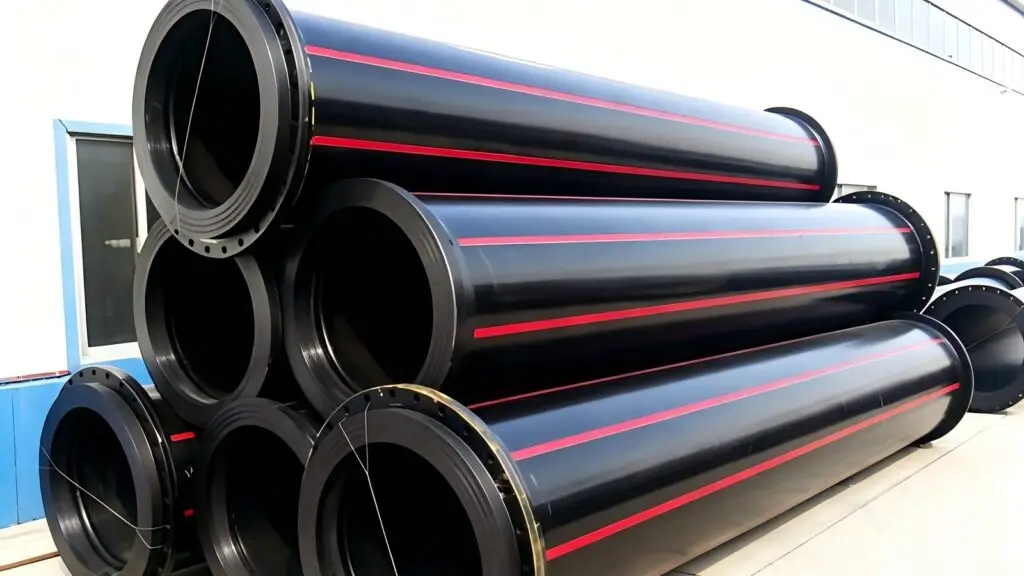
Article2026-10-31
HDPE Pipe Guide 2026: 10 Chinese Factories Compared
We compared 10 Chinese HDPE pipe factories on scale, price, certification and export readiness — plus where one-stop pipe, hose and floater supply wins.
21 min readRead More →
A 10-inch dredge hose quotes anywhere from $18 to $95 per meter. Here are the six variables behind the gap, 2026 price bands, and how to read a quotation.
Quick answer: in Q4 2026, a Chinese-made sand discharge hose lands between $13 and $42 per meter FOB for the sizes most dredging crews actually buy (6" to 12"), and between $55 and $130 per meter once you go past 16" or add self-floating construction. Anything quoted below $10/m is almost certainly a water hose with a dredging label on it. Anything above $150/m should come with a test report, a named rubber compound, and a flange drawing.
That is the honest range. The rest of this article explains why two quotations for "10 inch dredge hose" can differ by 5×, and how to tell which one you are actually looking at. If you are still deciding between a suction hose and a discharge hose, note that they are priced differently — SRH and DRH are not interchangeable, and the suction side carries the vacuum reinforcement.
Open any B2B marketplace and search for a 10-inch dredging hose. You will see $0.88 per meter next to $100 per meter, both labelled "abrasion resistant rubber dredging hose." Buyers send me screenshots of this every week, asking which one is real.
Both are real. They are not the same product.
A $0.88/m listing is usually one of four things: a PVC layflat hose, a suction hose with a single textile layer and no helix wire, a per-piece price that has been mislabelled as per-meter, or a bait listing designed to collect your inquiry. None of them survive a 300 mm dredge pump pulling sand at 20% solids for a season.
A $95/m hose is usually a 10-inch hose with four textile plies, a hard helix wire, 40 mm walls, SS316 flanges, and a 3:1 safety factor — the kind of thing that runs 4,000 hours on a tin mine rather than 400. Our sand discharge hose page shows a fully specified build of this type, layer by layer, which is useful as a reference even if you buy elsewhere.
Between those two points sit six variables. Every legitimate quotation is a combination of them. Once you can read the six, a quote stops being a number and becomes a specification.
The intuitive assumption is that a 12-inch hose costs 50% more than an 8-inch hose. It does not. It typically costs 90–120% more.
Rubber volume scales with the square of diameter, but that is only half of it. Larger bores need thicker walls to resist collapse under suction, heavier helix wire to hold shape, and stronger flanges because the end load at 2.5 MPa grows with the area. A DN200 hose with a 1.6 MPa rating sees roughly 50 kN of axial force at the flange. A DN400 hose at the same pressure sees 200 kN. The flange, not the rubber, is what gets expensive.
Practical consequence: if your pipeline design lets you run two 8-inch lines instead of one 12-inch line, you will usually spend less on hose and more on pumps. Run the numbers before assuming bigger is cheaper per cubic meter. Note also that the suction side of the line is built differently from the discharge side — sand suction hose carries extra reinforcement against collapse, and is priced accordingly.
This is the single largest cost lever, and the one buyers understand least. Four common builds, in ascending cost:
If a supplier cannot tell you the ply count and the helix wire diameter in millimetres, you are not talking to someone who makes the hose.
Natural rubber (NR) is the default bore material for sand and gravel: excellent abrasion resistance, moderate cost, poor oil resistance. SBR is cheaper and slightly less abrasion-resistant — common in budget builds and one of the reasons a cheap quote is cheap. NBR is for oil-contaminated slurry. EPDM is for heat and ozone, not abrasion.
Compound cost differences between NR and SBR at the bore are modest per meter — often 5–12%. The difference in service life on silica sand is not modest. Ask which compound is in the bore, and ask what the abrasion loss is in mm³ per ISO 4649. A supplier who quotes the number is a supplier who tests. We publish our own abrasion test method and results for exactly this reason.
Dredge hose is quoted at 1.0, 1.6, or 2.5 MPa (10, 16, 25 bar) working pressure, with a burst ratio that should be at least 3:1 and is commonly 4:1. Moving from 1.0 to 2.5 MPa at the same diameter typically adds 25–45% to the price, because the reinforcement and the flange both have to change.
Most sand suction lines only need 1.0 MPa. Booster-pump discharge lines and long vertical lifts are where 2.5 MPa earns its money. Do not buy 2.5 MPa "for safety" on a suction run — you are paying for reinforcement that does nothing and adds weight that makes handling worse. If the pressure rating on your line is not something you can state from memory, start with what 1.0 MPa and 2.5 MPa actually mean on site.
The hose is often less than half the delivered cost of a hose assembly. Flanges are the rest.
A pair of carbon steel flat flanges on a 10-inch hose might add $40–70 per assembly. The same flanges in SS304 roughly double that. SS316 doubles it again. Swivel flanges, which save a full rotation during installation and are worth every cent on a floating line, add a further premium.
This is also where cheap quotes hide. A quotation that specifies "with flanges" and nothing else is telling you the flanges are carbon steel, drilled to whichever standard the factory had on the shelf, with no gasket and no bolt set. On a saltwater dredge that is a two-year corrosion problem you bought at a discount.
Dredge hose is made in standard lengths — commonly 6 m, 11.8 m, or 12 m — because that is what fits a 40-foot container without a monstrous freight bill. Custom lengths are possible, but they add setup cost and they can turn a neat container load into an out-of-gauge shipment. We covered the shipping side of this in how oversize diameters load into a container, and it is worth reading before you specify a 13 m length.
Quantity matters less than most buyers assume. The raw material is not the constraint; the vulcanising cycle is. A 300 m order and a 1,000 m order from the same factory typically differ by 8–15% per meter, not 40%. If a supplier drops 40% when you double the quantity, ask what changed in the build.
A note on "cheap" per-meter pricing: some listings quote per meter but ship per piece, per roll, or per 6 m length. Always confirm the unit before comparing. We have seen a $2.10/m quote turn into $12.60/m at the proforma stage — same supplier, same page.
Comparing hose on purchase price alone is how dredging operations end up buying three hoses a year. What you want is cost per cubic meter of material moved, and that has four inputs:
A hose at $28/m that lasts 3,000 hours beats a hose at $16/m that lasts 1,200 hours by a wide margin, before you count the two extra change-outs. This is why serious dredging contractors buy on specification and test report rather than on the lowest line in the comparison sheet.
Our own position is deliberately unexciting: we would rather sell you a 4-ply NR hose at a mid-market price and have you reorder in three years than sell you a cheap bore and lose the account in eight months. If you want a neutral industry starting point on how dredging work is costed before you compare hose prices, the International Association of Dredging Companies publishes free guidance worth reading.
Abstract price bands are easy to write and hard to trust. So here is one actual order, with the numbers left in.
A river sand operator in Peru had been buying 10-inch suction hose from an incumbent supplier. Two things pushed him to look elsewhere: quotations that came back vague and untechnical, and delivery times that kept stretching. He found us through Google, wrote in Spanish, and got an answer the same evening — in Spanish. That last part mattered more than it sounds. He had already dealt with suppliers who took two days to answer and then answered a different question.
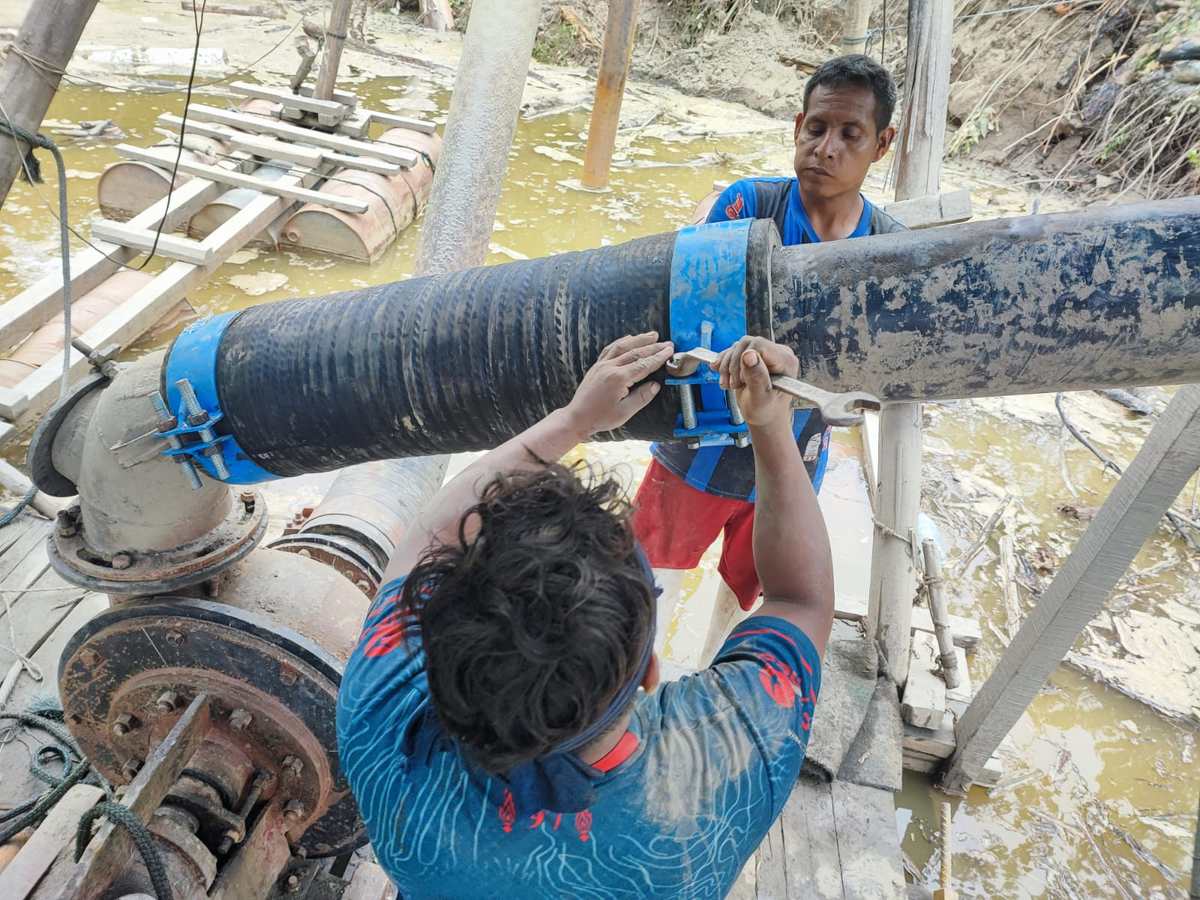
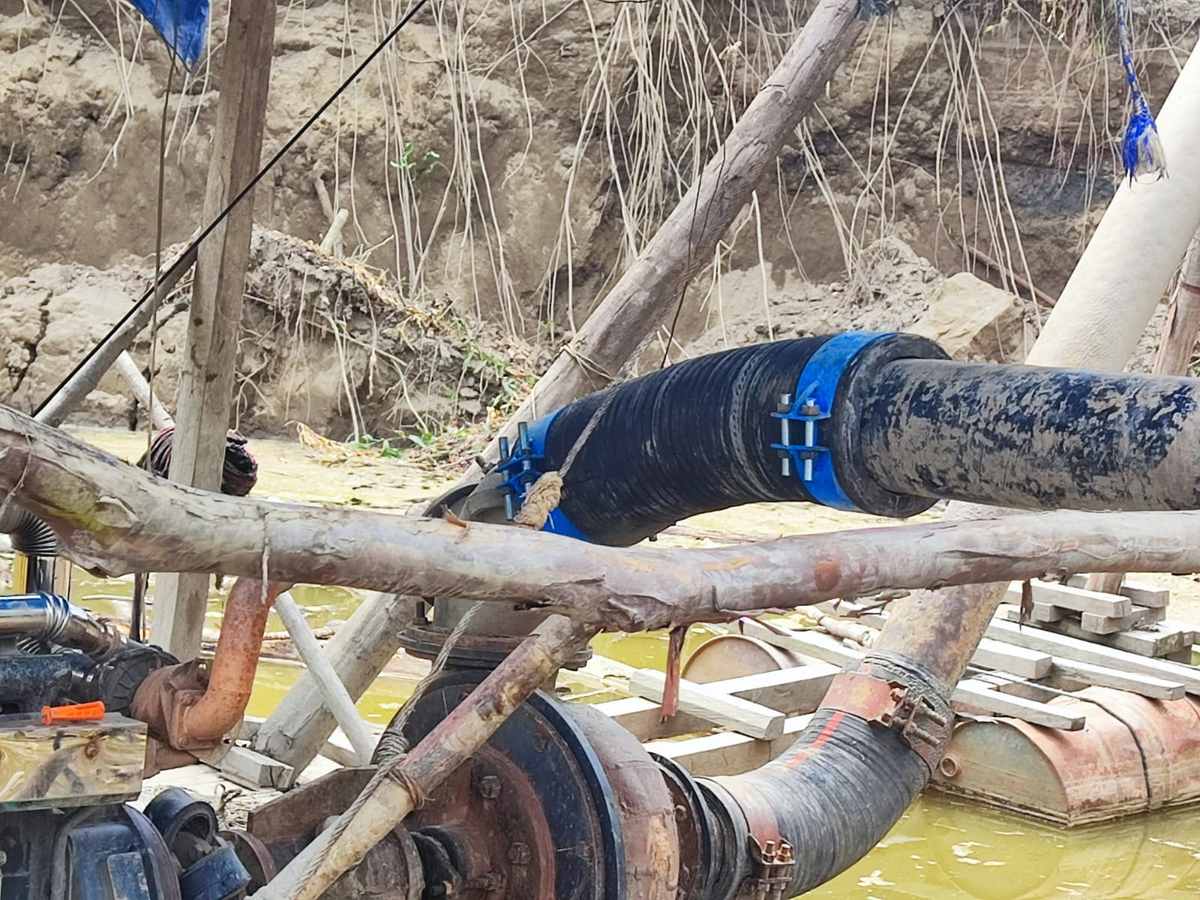
The duty. Fresh water, a stony river bed, dredging from about 12 metres down and pushing the slurry roughly 400 metres to shore at around 20% solids — running 12 hours a day, twelve months a year. Stones matter more than sand in this application — a 10-inch suction hose on a stony bed takes impact as well as abrasion, and at that depth the suction side runs a hard vacuum — exactly the collapse condition the helix wire exists for. That is a harder duty than the same bore on clean sand.

What he was actually afraid of. Not the price. He had three concerns: that a cheaper bore would wear out faster than what he was running, that the delivery date would slip again and stall his season, and that a supplier he had never used could not hold a dimensional tolerance on a short length. That last one is not paranoia. A 1-metre cut of 10-inch hose has very little room for error.
What he ordered.
| Diameter | 10 inch (DN250) |
| Length | 1 m per piece × 200 pieces (200 m total) |
| Bore compound | SBR |
| Working pressure | 1.0 MPa |
| Ends | Camlock |
| Packing | Wooden crates |
| Total order value | USD 3,000 — about $15 per metre, FOB China |
| Lead time | 20 days from deposit |
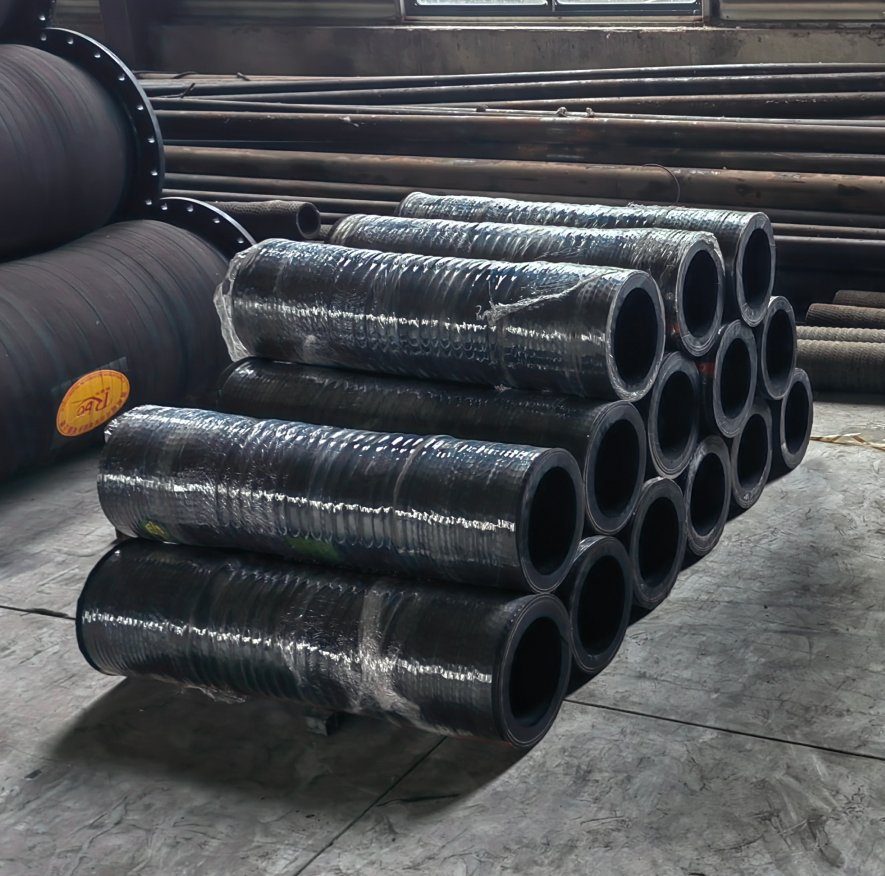
Note what that $15 buys: a 1.0 MPa working pressure, an SBR bore, camlock ends instead of flanges, and a short cut length with no assembly labour. It is a real hose for a real job — it is simply not the same product as a 4-ply natural rubber hose with SS316 flanges at $42. This is the whole point of the six variables above. The $15 quote is not a lie. It is a specification.
The problem that showed up. Some of the 1-metre lengths came out 5 mm over. Rubber moves with temperature — a 1 m cut has no slack to absorb it, and our tolerance on that run was looser than it should have been. We caught it before the crates closed, told him rather than shipping quietly, and sent photographs and video of every crate before it left the factory. He measured the 5 mm against his couplings and decided it would seat without leaking. No replacement, no claim, no delay.
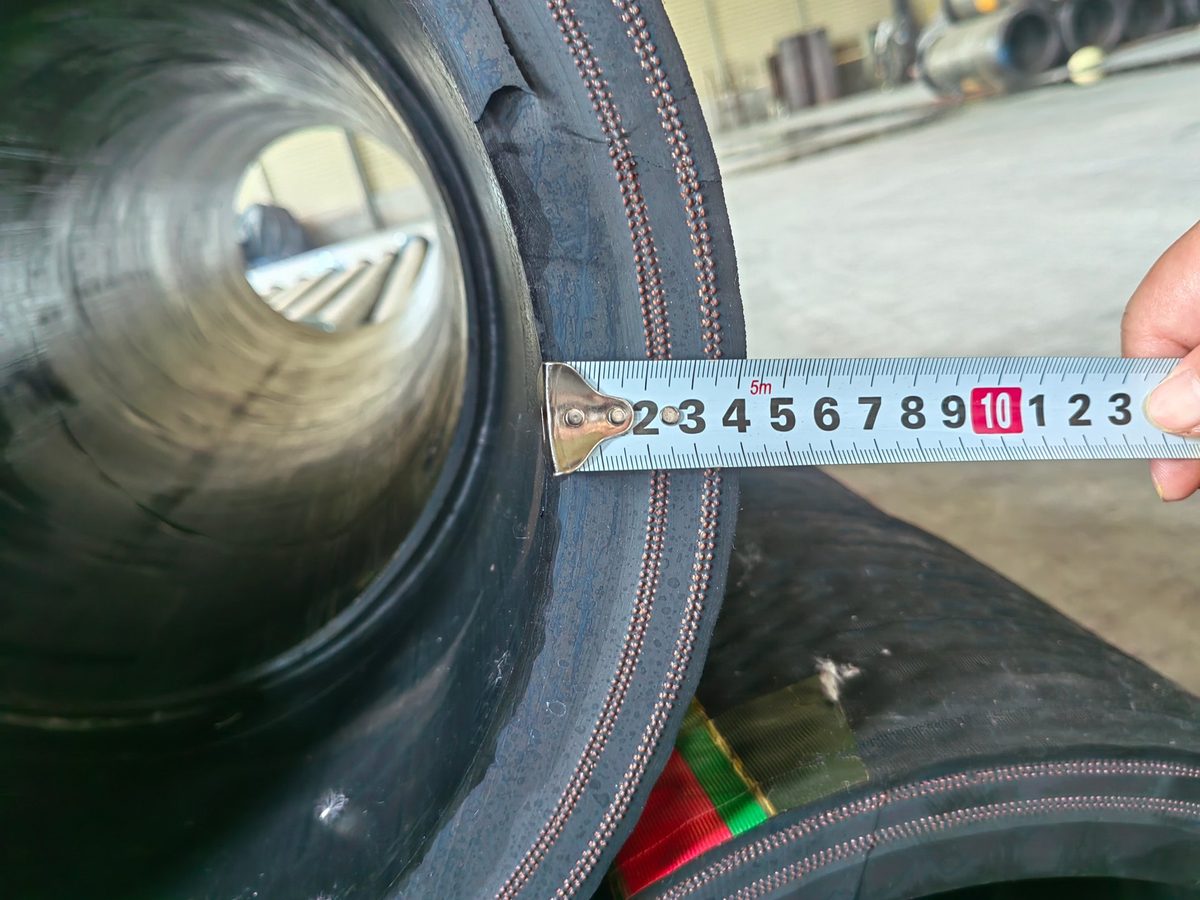
We include this because a case study with nothing wrong in it is not a case study. The 5 mm was our error. What he was buying, in the end, was not just hose — it was being told about the 5 mm before the container sailed.
Where it landed. Eight months in, roughly 200,000 m³ moved, no hose replaced. His previous supply had needed changing at about the four-month mark in the same duty — same river, same pump, same crew. By his own estimate, the avoided downtime is worth roughly USD 50,000 over the period. That figure sounds inflated until you price a stopped dredge: one unplanned hose change here costs him a full working day with the crew standing idle, and a working day on this river is measured in thousands of cubic metres that did not move. He has stayed with us since.
What this order teaches about price: he did not switch to us because we were the cheapest quote on the table. We were not. He switched because the previous supplier could not answer a technical question and could not hit a date. On a 200 m order worth $3,000, roughly doubling service life is worth many times the gap between the lowest and the highest quotation he received — and that gap was never the thing keeping him up at night.
If any of these is missing, the quote is not comparable to another quote — it is just a number.
Two quotations that both answer all twelve can be compared. Two that answer four of them cannot, and the cheaper one is almost always the one answering fewer.
For long, straight, permanent runs, HDPE pipe is usually cheaper per meter than rubber hose at the same bore — often 30–50% cheaper at 8" and above. It also has lower friction loss and a longer service life on benign slurry. See our HDPE dredge pipe range for the specifications we stock.
It loses on three things: it does not flex, so you need bends, anchors, and a shoreline that suits it; it cannot be coiled for relocation; and it does not tolerate the same abrasion severity as a thick natural rubber bore on sharp sand and gravel. Floating HDPE lines also need a separate buoyancy system, which changes the total cost considerably.
Rule of thumb we use: straight, fixed, long run on fine sand — HDPE. Moving dredge position, sharp aggregate, or short flexible connections at the pump and the discharge end — rubber. Most real installations need both, joined at a transition piece. If you are not sure which side of that line your job falls on, the rubber-vs-HDPE comparison works through it case by case.
Expect $26–$42 per meter FOB China for a 4-ply natural rubber sand discharge hose at 1.6 MPa with carbon steel flanges. Add 25–40% for SS316 flanges, and 40–60% more for a self-floating configuration. Quotations below $15/m for this specification are usually a lower ply count or a thinner wall.
Almost always one of three things: fewer reinforcement plies, thinner walls, or flanges not included. Ask for the twelve-point quotation above and the gap usually explains itself within one email.
Up to a point. Going from a 2-ply to a 4-ply build measurably extends life on abrasive duty. Going from 4-ply to 6-ply on fine sand often does not, because the failure mode is bore wear, not structural failure — you would be buying reinforcement that never gets loaded. Match the build to the failure mode you actually experience.
For standard sizes, usually one container load — but how many metres fill a container depends heavily on diameter, and the biggest bores are ordered by the piece rather than by the metre. Below a full load, per-metre pricing rises because the setup cost is spread over fewer metres. Small trial orders are possible and we do them, but expect to pay a sample-level rate.
Standard specifications: 20–30 days ex-works, plus 25–35 days sea freight to most destinations. Custom flanges, non-standard lengths, or self-floating builds add 10–15 days. Plan spares around the 60-day figure, not the 30-day figure.
If you send us four numbers — inner diameter, length, working pressure, and what you are pumping — we will come back with a specification and a per-meter price the same working day, with the twelve points above already filled in. If your current supplier's quote is cheaper, send it across and we will tell you which of the six variables they left out. Sometimes the answer is that they did not leave anything out, and you should take the deal.
Diameter, length, working pressure, and what you are pumping — we come back with a specification and a per-metre price, with the twelve points above already filled in.
Request A QuotationWe also published the companion guide on sand suction rubber hose price, broken down by diameter.

Need a specification check, a price band or a lead-time estimate for your project? Send me the working conditions (diameter, pressure, medium, length) and I will reply personally, usually within one working day.
We compared 10 Chinese HDPE pipe factories on scale, price, certification and export readiness — plus where one-stop pipe, hose and floater supply wins.
A sand suction rubber hose runs $9–$95 per metre FOB China in 2026 by size and build. This guide breaks down the 7 price variables, a per-diameter price table, and a ...
A look inside our slurry loop rig, hydrostatic test bays and adhesion pull-off records.